 FreeFree
Description
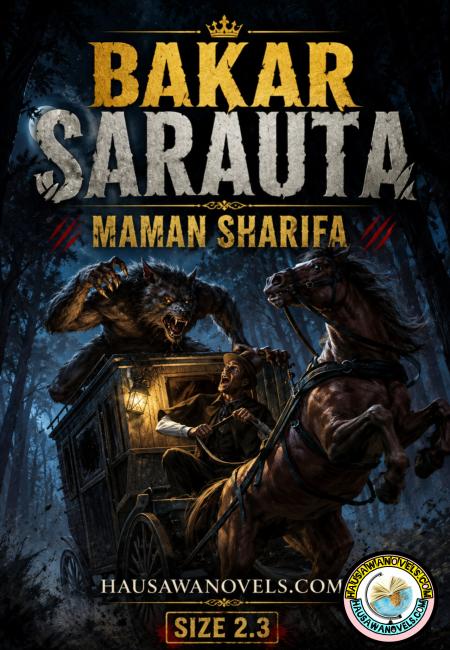
Baƙar Sarauta" (The Dark Sovereignty) by Nana Deejah (Mrs. Sharif).
Part 1: High-Quality English Translation
PAGE 1: THE BLACK CONQUEROR AND THE LOST THRONE
Disclaimer from the Author: I do not authorize any modification, reproduction, or unauthorized distribution of this text. Built by the Jarumai Writers Association: Our pen is sharper than the sword.
In the Name of Allah, the Most Gracious, the Most Merciful.
The ancient metropolis of Bahar Usuq was a city that loomed with legendary status across the northern regions of the land of Sin (China). The city was world-renowned for harboring titanic warriors and peerless champions capable of completely bringing down an entire fortified city in a single day. Concurrently, it was feared globally for its cabal of high sorcerers—masters of ancient dark magic, forbidden occultism, and profound witchcraft.
For centuries, mighty warrior kings had ruled the throne of Bahar Usuq. However, a grim curse bound their bloodlines: every single ruler historically lost their life in the obsessive pursuit of a singular, monumental ambition—a conquest that had defeated and destroyed every king who dared to attempt it. Seeing how the greatest rulers of the continent systematically perished in their prime, the later kings collectively abandoned this dark ambition, choosing survival over historical glory.
Until King Urwat bin Shamraz ascended the throne. He was the twenty-fifth sovereign to rule over the great metropolis of Bahar Usuq.
King Urwat was a colossal, giant-statured monarch of massive physical build. He possessed unparalleled muscular strength matched with a deep, authoritative knowledge of dark magic and sorcery. Under his rule, Bahar Usuq overawed the neighboring kingdoms across the continent because Urwat had successfully conscripted a terrifying imperial army composed not just of elite human warriors, but also of powerful Jinns and predatory beasts.
The defenses of Bahar Usuq were absolute. Not even a stray chick could breach the city gates without the explicit, documented permission of King Urwat. Countless foreign empires had launched massive military invasions against Bahar Usuq, but history recorded that not a single invading soldier ever left the city walls alive. The massive, towering defensive walls of the city were literally mixed and built using the blood of the fallen enemy warriors who had perished trying to conquer it.
Deep within the inner sanctum of the royal palace sat a medium-sized chamber decorated entirely with pure, untainted jewels. The room was devoid of unnecessary furniture, holding only three grand thrones placed strategically at the center. The central throne was a massive masterpiece forged entirely from raw, unrefined gold (Dinari), while the two flanking thrones were smaller but equally magnificent.
Seated upon the golden central throne was King Urwat. He wore a fine, light royal robe that left his chest bare, his face uncovered, and his head free of a turban. His facial features radiated an intense, terrifying aura of absolute authority (Kwarijini). His thick, muscular arms were heavily veined and solid. A single look at him left no doubt that he was the embodiment of raw bravery and the supreme military heritage of great conquerors.
Flanking him on the two smaller thrones were two young princes who shared a striking, mirror-like resemblance to one another.
Kneeling before these three thrones was a withered, heavily wrinkled old sage. He possessed long, stark white hair that seamlessly blended into a flowing white beard that reached his waist. With his head bowed low in profound reverence, the old sorcerer began his presentation:
"O Grand Sovereign, you must know that this ancient ambition you seek to revive has been abandoned since the reign of your fifth paternal ancestor. For three thousand, three hundred, and sixty years (3,360 years), from the exact moment that quest was abandoned to this very day, no mortal or immortal has ever marched toward that goal and returned alive."
Before the old sage could even finish his sentence, King Urwat unleashed a terrifying, earth-shattering roar of anger. The sheer sonic force of the king's shout physically blasted the old man backward, causing him to tumble across the polished floor. Trembling violently, the old sage managed to pick himself up with great difficulty. With his voice shaking in absolute fear, he cried out:
"Forgive me, my Grand Master! Forgive my insolence! I only speak of the terror of the ambition. This quest is none other than the conquest of the City of Kangiwa (The Elephant Sovereign). Across the entirety of our known continents, no nation matches Kangiwa in terms of infinite wealth, absolute power, and magical dominion. The throne of that city is unlike any other throne in existence.
My Lord, that karagar (throne) was built directly over the tombs of the supreme Emperor of the Jinns, the Grand Master of the world's sorcerers, and twelve of the most ruthless generals of war in history. The throne was anchored and engineered right on top of their resting places. Grand King, the reason every ruler obsesses over conquering this city is simple: any monarch who manages to sit on that throne will instantly hold every single ambition in this world under their absolute control. Whatever that king decrees will instantly manifest across the earth.
Yet, for two thousand years now, no king, no queen, no powerful Jinn, and no grand sorcerer has ever successfully ascended the throne of Kangiwa.
This vacancy exists because the last ruler to conquer that city was a terrifying warrior Jinn—the legendary King Darbuza. He ruled completely over humans, Jinns, and massive mythical beasts alike. His power echoed across the corners of the earth; he was so absolute that not even a bird could fly or feed without his divine permission. During his reign, he systematically hunted down every powerful sorcerer and rebellious Jinn on earth, slaughtered them, and bound their collective dark magic into a single, supreme war helmet forged of pure white silver (Ba'ar Azurfa), which he wore at all times.
When King Darbuza realized his own immortal life was drawing to an end, he assembled his most elite vanguard and marched toward the terrifying Cave of Madaful Azab (The Cavern of Torment). This cavern is a hellish abyss that seals the most monstrous predatory beasts and ancient rogue Jinns in existence. It lies incredibly far from our continent—a journey of three months on premium, high-speed warhorses, and six months on ordinary steeds. Because King Darbuza was the emperor of both Jinns and men, his elite Jinn warriors used their supernatural speed to transport him there in just three days.
The moment King Darbuza stood before the gaping maw of the Cave of Madaful Azab, he removed the silver war helmet from his head. Using the sharp edges of the helmet itself, he sliced his own throat! His royal blood erupted in a violent spray, completely soaking and saturating the artifact. As his immortal body began to shake violently and his soul prepared to exit his flesh, he gathered his final, terrifying burst of strength and hurled the blood-soaked helmet deep into the dark abyss of Madaful Azab.
Immediately after, his body petrified into solid stone, completely devoid of life. From that historic moment until this very day, the City of Kangiwa has remained completely abandoned, without a single soul capable of ruling it. No one can sit upon that throne unless they personally journey into the horrors of the Cave of Madaful Azab, retrieve the cursed helmet of King Darbuza, and place it upon their head.
As I have stated, my Lord, it is a treacherous three-month journey on the finest stallions. It is a path that history records as being more filled with agonizing torments, horrific curses, and mind-shattering disasters than any other place on earth. Furthermore, since the day Darbuza died, a grand magical seal has prevented any Jinn from flying over that terrain. Anyone who dares to go must travel strictly on foot or ride upon beasts. This means the Jinns cannot use their supernatural flight to shorten the journey."
The old sage finished his explanation, drawing a deep breath and falling completely silent, his head pressed firmly against the floor.
A wave of intense, bitter fury and burning dark ambition washed over King Urwat as the tale concluded. Instantly, his face flushed a dangerous, deep crimson color. His eyes bulged with manic intensity, and his heavy cheeks quivered with pure rage. A bitter, metallic taste filled his mouth. Without uttering a single word to the old man, he stood up violently and stormed out of the chamber, his two identical twin sons following immediately in his wake.
PAGE 2: THE TWIN PRINCES AND THE GENERAL'S TERROR
King Urwat marched through a private corridor and entered a sprawling, breathtaking royal parlor of massive proportions. The grand living room was beautifully adorned with luxurious silk banners hanging meticulously across its four corners. The walls were draped in heavy scarlet-red curtains accented with intricate, shimmering golden patterns. Arranged neatly along the left and right flanks of the parlor were twenty-four single-seater thrones crafted for royalty—twelve seats on each side.
Running right through the center of the hall was a long, plush crimson carpet. Atop it sat a massive table carved from pure crystal glass, laden with exotic fruits and elegant chalices filled with assorted juices and wines. At the far end of this magnificent hall stood a single, supreme royal throne of deep red, heavily embellished with pure, solid gold.
King Urwat placed both hands behind his back, pacing the length of the hall in deep, heavy thought. Stopping dead in the center of the crimson carpet, he opened his right palm and stared into it intently, as if reading a vision or a complex calculation in his skin.
"I swear by the supreme glory of the throne of Kangiwa," Urwat growled, his voice vibrating through the stone walls, "I will conquer and possess that city! I will have it even if it costs an unquantifiable number of lives! I will have it even if this entire continent is completely drenched in blood! I will bury millions of corpses beneath the foundations of my grand global empire!"
"You are more than capable, our noble father," a voice echoed. "And we, your sons, have already made our decision to ensure you rule the City of Kangiwa in absolute glory."
King Urwat turned around slowly, his intense gaze falling upon his two remarkably handsome twin sons. A wide, prideful smile broke across his face, though he remained quiet, allowing them to speak.
One of the twins, Prince Rukkas, stepped forward and looked his father in the eyes. "Our noble father, you must know that our hearts are filled with burning frustration and shame that we are sitting idly here in Bahar Usuq while the legends of past conquerors fade into history. The names of those great men who answered to the title of 'Men'—not cowards—are still remembered. Therefore, my brother Rakkus and I have firmly resolved to journey to the terrifying Cave of Madaful Azab ourselves to retrieve the silver war helmet of King Darbuza! Father, know this: even if we do not return alive, our names will be permanently etched into history as the legendary champions who dared to face the horrors of Madaful Azab—a nightmare that ordinary warriors dare not even look upon!"
Hearing these words from his sons, King Urwat’s heart swelled with immense paternal pride and dark joy. The bitter frustration that had weighed heavily on his soul vanished instantly, replaced by a roaring fire of imperial ambition. The absolute certainty of becoming the global Emperor of Kangiwa completely consumed his heart.
He stepped forward slowly, placing himself directly between his two identical sons. Resting a heavy hand on each of their shoulders, he looked at them with burning affection. "You are my absolute pride! Truly, today you have filled my soul with boundless joy and absolute certainty regarding the supreme courage of my lineage. I am now fully confident that even after I pass away, my dominion will never fade from this earth because I have raised true lions. Therefore, I want to inform you both that I am completely ready. We will march against the Cave of Madaful Azab together! Go at once and command the Grand General of War to mobilize our entire imperial army. In three days, we march!"
When the royal decree of King Urwat reached the ears of Grand General Ramwal, the legendary commander's legs began to shake violently. His heart skipped a beat, and a cold dread seized his chest. He had known the horrific legends of the Cave of Madaful Azab since childhood; the sheer terror of the news caused his bladder to loosen, and cold sweat mixed with panic.
In the entire military history of Bahar Usuq, Grand General Ramwal had never once flinched or shown fear, even when facing massive armadas of hostile Jinn clans. Throughout the annals of the city, he was the undefeated commander who personally led the vanguard of human and Jinn sorcerer-soldiers into the most brutal meat-grinders of war. He was a ruthless warrior who fed on battlefield adrenaline; under his command, enemy heads fell to the earth like withered leaves during a harvest. Both mortals and supernatural beings across the continent terrified themselves at the mere thought of engaging Bahar Usuq in warfare, entirely because Ramwal was a merciless force of nature. In terms of raw battlefield speed and lethal ferocity, his flesh was said to be forged with the spirit of a wild lion. In truth, even King Urwat did not possess the raw combative prowess of General Ramwal; the king only surpassed him in political terror and strategic malice.
Yet, with a completely numbed and heavy spirit, Grand General Ramwal walked back to his private estate. In his mind, he was already calculating the very few days he had left to live. His eyes bulged, flushing a deep, tearful red—though a champion of Ramwal's status would never allow actual tears to fall.
Across the entire metropolis of Bahar Usuq, a wave of profound sorrow and panic gripped every human and Jinn warrior. The hearts of legendary fighters broke, and women wept bitterly throughout the residential quarters, mourning the impending departure of their husbands. They all held an absolute, grim certainty: this imperial mobilization was a march of death—a final farewell.
The usually boisterous city fell into a deathly, haunted silence. The only sounds echoing through the streets were the anxious braying of warhorses, the chaotic crying of livestock, and the ominous chirping of birds. Inside the homes, legendary killers sat with their families, weeping silently in the dark.
THE HIDDEN PRINCESSES OF THE WILD
Meanwhile, far away from the sorrow-laden atmosphere of Bahar Usuq, the thunderous sound of galloping hooves echoed through a small, dense forest. A massive cloud of dust kicked up into the air, completely obscuring the horizon. Out of the dust cloud, two magnificent white stallions emerged, sprinting at breakneck speeds in a fierce, competitive race.
Riding atop each horse was a slender figure clad in form-fitting tunics and trousers crafted entirely from premium leopard skin. Their boots were made of matching hide. Their faces were meticulously wrapped in traditional veils, leaving absolutely nothing visible except their sharp, piercing eyes. Slung across their backs were leather quivers bristling with lethal arrows, while their hands firmly held elegant bows.
As they rode, they synchronized their movements and targeted a wild rabbit darting through the brush. One of the riders released an arrow with lightning speed, striking the rabbit dead in its tracks. The two horses smoothly decelerated, coming to a gentle halt near the game. The rider who fired the lethal shot slid off her saddle gracefully, picking up the rabbit with a soft chuckle.
As they both unwrapped their heavy face veils, two breathtakingly beautiful faces were revealed, framed by long, glossy black hair that reached all the way down to their waists. Any onlooker would have been struck with absolute amazement to see such exquisite young women commanding massive warhorses with such professional, veteran military precision.
Giggling happily, the victorious archer teased her sister, their melodic laughter echoing through the lonely forest. After enjoying their moment in the wilderness, they set the game aside and walked over to a pristine, clear stream flowing nearby. Kneeling gracefully by the water's edge, they performed their ritual ablutions (Alwala). They then walked into a small, secluded straw hut nearby, brought out a small prayer mat, spread it neatly over the forest floor, adjusted their modest veils, and stood up together to establish their prayers...
Part 2: Detailed Story Summary
"Baƙar Sarauta" (The Dark Sovereignty) Book 1 introduces an epic high-fantasy world blending traditional Hausa lore with grand dark magic and ancient empire-building.
[ THE LEGEND OF KANGIWA ] | +---------------+---------------+ | | [ KING URWAT ] [ GENERAL RAMWAL ] • Ruthless Giant Monarch • Terrified Commander • Driven by Absolute Power • Knows the Fatal Truth | | ( PRINCES RUKKAS & RAKKUS ) ( THE ANXIOUS WARRIORS ) • Identical Twin Champions • A City Mourning its Doom- The Legacy of Bahar Usuq: Set in the mythical northern city of Bahar Usuq (within the broader realm of Sin/China), the story establishes a kingdom protected by elite humans, Jinns, and war beasts. Its walls are literally fortified with the blood of failed invaders, ruled by the tyrannical giant sorcerer-king, Urwat bin Shamraz.
- The Curse of the Elephant Throne: An old royal sage reveals the ultimate forbidden ambition: the conquest of the lost City of Kangiwa. Its vacant throne holds absolute global dominion but is cursed. The last ruler, a Jinn Emperor named King Darbuza, bound all the world's magic into a silver helmet, slit his own throat as a blood sacrifice, and threw the artifact into the fatal Cave of Madaful Azab.
- The Twin Princes' Vow: To achieve this power, a mortal must survive a perilous three-to-six-month trek on foot or beast (as Jinn flight is magically blocked over the terrain) to retrieve the helmet. Inspired by this dark glory, King Urwat's identical twin sons, Princes Rukkas and Rakkus, volunteer for the suicide mission, prompting the king to order a full imperial mobilization within three days.
- A City in Mourning: The announcement causes widespread panic. Even the city's undefeated, lion-hearted military commander, Grand General Ramwal, is terrified to the point of physical collapse, knowing that the journey to Madaful Azab is a guaranteed death sentence. The city falls into a haunted silence as families weep over what they recognize as a final farewell.
The Mystery Maidens: The perspective shifts to a remote forest, introducing two highly skilled, extraordinarily beautiful hidden princesses/archers. Dressed in leopard skin and capable of masterful horsemanship and combat, they remain detached from the panic of the palace, concluding the segment with peaceful prayers in the wilderness.
Part 3: Literary Character & Thematic Analysis
Character Profiles
- King Urwat bin Shamraz: The quintessential dark conqueror. He exhibits massive physical stature, an aura of terror (kwarijini), and a complete lack of empathy. His willingness to "drench the entire continent in blood" and "bury millions of corpses" underscores his role as an absolute autocratic force driven by legacy and ultimate control.
- The Twin Princes (Rukkas & Rakkus): Mirror images of youth, toxic martial pride, and royal conditioning. They perceive peace as a source of shame and actively seek a death-defying quest to immortalize their names in blood and song, serving as the perfect catalytic tools for their father's imperial machine.
Grand General Ramwal: A brilliant subversion of the "fearless general" trope. Ramwal is established as an absolute monster on the battlefield, yet the mere mention of the supernatural horrors of Madaful Azab breaks his spirit entirely. His internal panic highlights the cosmic horror scale of the journey ahead.
Thematic Core: The Price of Absolute Sovereignty
The central theme centers around Baƙar Sarauta (Dark/Black Royalty)—the concept that supreme worldly power demands horrific human sacrifices. The physical structure of Bahar Usuq (walls built with blood) and the throne of Kangiwa (built over the graves of slaughtered sorcerers and Jinns) serve as literal architectural metaphors for how totalitarian empires are constructed on the bodies of the dead.
Part 4: Cultural & Technical Evaluation
- Genre Fusion: The text is a masterful blend of Hausa Literature Group (Littattafan Yamma) style with high epic fantasy elements. The author effectively integrates traditional Islamic practices (performing Alwala and Sallah in the woods) alongside deep-rooted Afro-centric/Hausa mythical concepts of Aljanu (Jinns), Bokaye (Sorcerers), and Tsafi (Dark Magic/Fetishism).
Linguistic Architecture: Nana Deejah utilizes high-register, dramatic Hausa prose. Words like Basamude (Colossus/Giant), Karagar (Throne/Seat of Power), Ingarman Dawakai (Premium/Stallion Warhorses), and Kwarijini (Aura of overwhelming awe/terror) elevate the text from basic prose into an immersive, old-world legendary chronicle.
Platform Continuity Update
- Current Narrative Coordinates: Page 3 concludes with King Urwat sitting on his throne alongside his twin sons as the elders of the council bow before him, a day prior to the launch of the imperial march.
- Active Worldbuilding Assets: The introduction of the leopard-skin-clad archer princesses presents an immediate parallel storyline that will likely clash with or assist the princes' march toward Madaful Azab.
Would you like me to process the next set of pages for "Baƙar Sarauta", or would you like to review custom upright 3D book cover concepts tailored to this epic dark fantasy aesthetic?