 FreeFree
Description
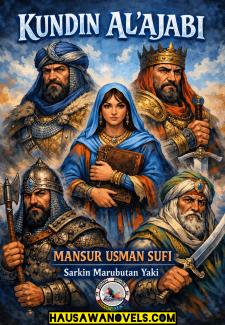
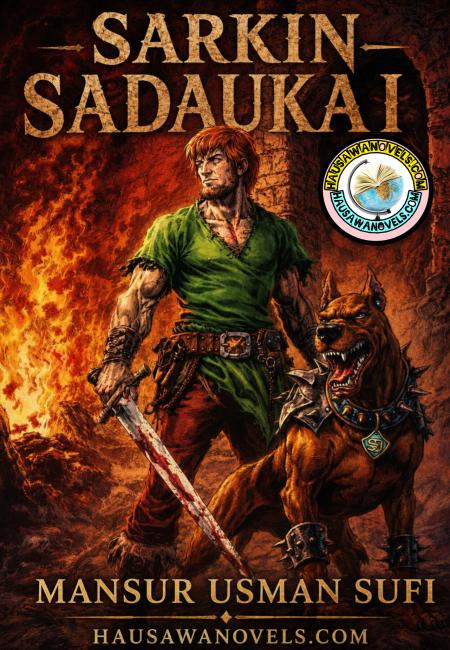
The King of Warriors (Part 1)
King of Epic War Novels: Mansur Usman Sufi
(WhatsApp & Call: 08137237071)
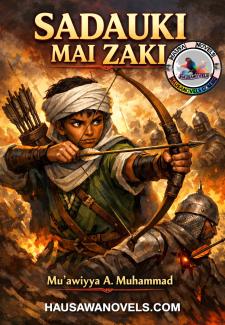
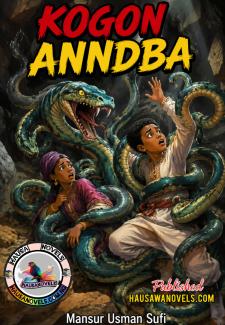
He was a remarkably handsome young man, seemingly a little over twenty years old, clad in animal skins from head to toe. His boots were crafted from leopard skin, and his hair cascaded down to his shoulders. Slung across his shoulder was a young boy about five years old.
The young man was running at an incredible, desperate speed through a vast, dense forest filled with towering trees, jagged rocks, flowing streams, and small hills. He ran so fast that he looked like a blur, leaping effortlessly over large rocks even after an hour of sustained running. Eventually, exhaustion began to set in, and his furious pace slowed down.
Suddenly and without warning, a torrential rain of fierce, deadly arrows began to pour from the sky, bombarding the forest. Reacting instantly, the young man utilized his combat instincts, dodging the arrows with astonishing, supernatural agility. Just as abruptly as it began, the rain of arrows ceased.
Seizing the moment, the young man darted into a dark, dense thicket. He gently removed the little boy from his shoulder and hid him deep within the shadows where no one could see him. Stepping about four paces away from the hiding spot, he stood his ground, scanning his surroundings warily as he waited for whatever was coming next.
Out of the shadows of the towering trees emerged an countless army of massive, heavily built warriors, resembling the ancient, giant people of Samud. They were as imposing as rogue elephants. They wore terrifying, majestic battle armor, and their faces were entirely concealed beneath iron helmets, leaving only their glowing red eyes visible. In their hands, they wielded vicious weapons: axes, swords, heavy spears, and slingshots.
Before the young man could make a move, the army charged at him with bloodcurdling battle cries. A brutal, chaotic fight ensued. Amidst the chaos, one of the massive warriors caught the young man off guard, landing a devastating punch directly to his face that sent him crashing helplessly to the ground.
The army commander immediately ordered his men to search the dense thicket. Within moments, they emerged dragging the little boy out. The commander tossed a sharp knife to the warrior holding the child. The warrior caught it and pressed the sharp edge against the boy's throat, preparing to slaughter him like a sheep. Nearby, another warrior held out a white basin to catch the child's blood.
Just as the blade was about to slice the boy's neck, an unexpected savior arrived. A mysterious rider burst like a lightning bolt out of the dense forest canopy. Before the executioner could even react, the rider unsheathed a massive, gleaming sword from their back and cleanly decapitated the warrior. The severed head flew into the air, and the lifeless body collapsed to the ground.
When the warlord, Lahmar, saw his warrior's corpse, he let out a furious roar and ordered his remaining men to swarm the rider. The entire army charged at once, and a horrifying, jaw-dropping battle commenced. The deafening clanging of clashing steel filled the air, drowned out only by the terrifying screams of dying men.
Wherever the mysterious rider turned, enemy warriors dropped dead like stalks of cotton during harvest. The army unleashed a relentless, furious assault on the rider, who countered with terrifying speed.
Hearing the absolute chaos of the battle, the little boy—who was blind—dropped to his hands and knees, crawling in terror until he managed to hide behind a large boulder. Within a mere seventy seconds, the mysterious rider systematically slaughtered more than sixty percent of the entire army. Terrified by this horrific display of martial dominance, the surviving soldiers began to lose their nerve, looking for any excuse to run away and save their skins.
Warlord Lahmar, witnessing the catastrophic destruction of his forces, flew into a blind, venomous rage. Meanwhile, the young man who had initially tried to save the boy lay heavily wounded on the ground, watching the titanic clash between the rider and Lahmar’s forces. His mind spun with absolute bewilderment, wondering to himself: How did this rider know I needed help? It was a question he couldn't answer.
Seeing that the rider was on the verge of completely wiping out his army, Warlord Lahmar executed a massive leap from where he stood, launching himself into the air like an arrow shot from a bow. Mid-air, he drew a pair of exceptional twin swords from his back and landed heavily right in front of the rider. The remaining soldiers retreated into a defensive perimeter, leaving the two formidable warriors locked in a tense, silent standoff.
This begs the questions: Where did this young man and the little boy come from? And why is this massive army hunting them down so relentlessly?
The answers lie in the past...
More than two thousand and forty-four years ago, on the western coast of the Red Sea, there existed a magnificent, powerful kingdom known as Zawatul-Ifdal (or the city of Madinatul-Ifdal). The kingdom was immensely prosperous, thriving in agriculture, livestock breeding, and global trade. To protect their immense wealth, they possessed an elite army of exceptionally resilient, iron-willed warriors.
The king who ruled this grand city was a legendary warrior of warriors and a highly renowned sorcerer. He was under fifty years old and went by the title King Shazwan ibn Zamaran. King Shazwan had only one wife, who bore him a single daughter named Princess Sulairat.
Princess Sulairat was an absolute beauty whose breathtaking looks were famed across the entire continent. Furthermore, she had inherited her father’s unmatched martial prowess and deep knowledge of the mystic arts.
The people of Madinatul-Ifdal lived in absolute peace and harmony, free from civil unrest. However, there was one devastating crisis that constantly threatened their existence: the sudden outbreak of a magical forest fire (Gobaran Daji).
This supernatural wildfire occurred precisely every six months—twice a year without fail. The fire would erupt from a mysterious, neighboring forest and sweep across the kingdom. Every time this plague appeared, it caused catastrophic loss of human life, destroyed millions of nairas worth of property, and leveled entire neighborhoods.
The continent's greatest sorcerers, seers, and researchers were divided on its origin. Some claimed the wildfire was triggered by a faction of rebellious, powerful djinns, while others argued it was the work of a sinister, rogue sorcerer. There was no consensus on how to stop it.
When King Shazwan realized that the plague was relentless and that consulting external sorcerers yielded no solutions, he took matters into his own hands. He summoned all the prominent sorcerers of his kingdom, commanding each to conduct intensive mystical research for two weeks to find the root cause.
At the end of the two weeks, the sorcerers gathered in a highly secure, secret chamber under the leadership of their Chief Sorcerer, an imposing and revered elder named Dargas ibn Aumal.
Seeing the council chamber fall into an anxious silence, King Shazwan cleared his throat and broke the tension, demanding: "You sorcerers and masters of the mystic arts, what are the findings of your research? What is the solution to the plague that brings us here?"
Upon hearing the King's stern words, an uncomfortable silence filled the room. The sorcerers shifted uncomfortably, glancing at one another, none brave enough to speak.
Finally, the Chief Sorcerer, Dargas ibn Aumal, stood up to face the king. Adjusting his grip on his mystical staff, he spoke in a booming, gritty voice: "My Sovereign, the overwhelming consensus of our deep research has revealed a startling truth. No rogue sorcerer or evil djinn is causing this wildfire. It is caused by a single, divinely gifted, and profoundly mysterious young warrior. Currently, there is no warrior—amongst humans or djinns—who matches his power. He is known as Hibairu ibn Sharwaz, meaning The King of Warriors."
Dargas continued: "Hibairu lives deep within the wilderness. He has no human contact, associating only with djinns and wild beasts. His mother died giving birth to him in the deep forest. Because of this upbringing, his behavior mimics that of wild animals. His strength is terrifying; he can punch a massive tree and shatter it to its roots, bringing it crashing down. He can sling a lion, a buffalo, or a leopard across his shoulders and run for miles without breaking a sweat. In battle, no matter how vast the enemy army is, he can completely annihilate them in under two hundred seconds. Astonishingly, Hibairu is barely seventeen years old."
"The devastating forest fire only happens when Hibairu is training his mystical war-bird. He trains himself and this bird purely to protect the honor of the forest animals, whom he views as his only family and lineage, having never seen another human being in his life."
As Chief Sorcerer Dargas delivered this revelation, King Shazwan was left completely dumbfounded. Dargas pressed on: "Our visions confirm that the King of Warriors is destined to leave the forest and enter the civilized world of his fellow human beings. However, this will only happen after he finishes training his mystical war-bird and successfully deciphers the final incantations carved onto a magical ring worn on his left hand. The magical secrets within that ring correspond directly to the total number of beasts living in his forest. Our research cannot pinpoint the exact day he will finish reading these secrets, but there is only one definitive way to stop the wildfires permanently. It is an absolute necessity."
(Author's Note/Break: 08137237071)
"We must sacrifice a blind, orphaned boy who has neither mother nor father. His blood must be drained and poured directly into the Well of Worship located at the center of our city. This is what the collective research of our magical brethren has proven."
Upon hearing this, King Shazwan was overcome with immense joy. However, leaning forward from his throne, he questioned Dargas: "O master of the arcane, I understand your explanation. But I have two pressing questions. First, where do we find a blind, orphaned boy? Second, how do we protect ourselves from the wrath of the King of Warriors when he inevitably emerges from the Baitul-Shamshan forest?"
The Chief Sorcerer fell into deep thought before replying: "My Lord, as we speak, the blind boy required for the sacrifice is already within the forests of your own kingdom. He is currently being protected by a skilled warrior who has guarded his life since his parents passed away. As for your second question regarding how to survive the King of Warriors, that is a highly complex matter requiring further deep mystical calculations. For now, our immediate priority must be hunting down this blind boy to stop the wildfire, which is set to strike us again in exactly six weeks. As the elders say, 'When the trouble becomes too heavy, one must protect their own.'"
Elated by this concrete plan, King Shazwan dismissed the council. The sorcerers vanished into plumes of magical smoke, agreeing to reconvene for a second round of research to find a countermeasure for the King of Warriors. King Shazwan touched a magical amulet strapped to his left bicep and instantly teleported, materializing directly inside his private royal chambers.
Immediately upon appearing, the king called out to one of his trusted handmaidens. The handmaiden appeared, bowing respectfully. King Shazwan ordered: "Sunaila, go to the Warlord's estate immediately. Tell him I command his presence right now."
"It shall be done, my Lord," Sunaila replied, bowing again before swiftly exiting the chambers.
King Shazwan paced around his room restlessly, unable to sit or stand still. Moments later, Warlord Lahmar materialized before him, dropping to one knee respectfully: "I am at your command, my Sovereign. What do you require of me?"
King Shazwan cleared his throat and said: "Warlord Lahmar, know that I have summoned you here for a critical mission. You must march into the lower forests of my territory and hunt down a five-year-old blind boy. Securing this boy is the only way to save our entire population from the impending wildfire. I give you two choices: either bring the boy back alive, or slaughter him there and bring me his blood in a basin."
Warlord Lahmar responded resolutely: "Consider it done, my Sovereign. Out of these two choices, one will certainly be fulfilled."
With that, the Warlord stood and marched out of the chambers. Lahmar was a man of terrifying physical stature. Though young, he possessed the giant, muscular build of the ancient Samud people, his muscles resembling stacked stones. He had a long, handsome, commanding face framed by a pitch-black beard and mustache. Barring the King and Princess, there was no greater warrior in the entire kingdom of Madinatul-Ifdal. His military title was hereditary, passed down from his legendary father.
Lahmar immediately mobilized an elite cavalry unit of thirty thousand battle-hardened warriors and rode out of Madinatul-Ifdal.
After riding swiftly through the wilderness, they spotted a solitary, isolated mud hut in the distance. Lahmar split his massive army into four divisions—flanking the hut from the West, South, East, and North, completely surrounding it.
The Warlord commanded an advanced unit of four thousand soldiers to breach the hut and drag out its occupants. Twenty warriors from the unit drew their weapons and stepped inside. Unfortunately for them, ignorance is darker than the night; if they had any inkling of the horror waiting inside, they would never have crossed that threshold.
The soldiers standing outside waiting for their comrades were horrified when the lifeless bodies of the twenty men were violently thrown out of the hut. Enraged, more soldiers charged inside, only for their corpses to be systematically tossed out into the dirt without a single scream being heard. Within minutes, more than half of the advanced unit was wiped out.
Furious, Warlord Lahmar bellowed a command for his remaining men to fall back. He marched to the entrance of the hut himself, preparing to breach it.
Suddenly and without warning, a colossal punch landed squarely on Lahmar's face. The sheer force of the blow launched the giant warlord into the air as if pulled by a winch, before he crashed violently back onto the dirt.
Before Lahmar could stand, a handsome young man bounded out of the hut like a springing rodent, a small boy slung over his shoulder.
Seeing the lone young man, the army rallied, raising their weapons and charging after him with terrifying war cries. The young man sprinted desperately into the deep forest, deftly evading their coordinated attacks. No matter how many volleys of arrows they fired, he flipped and dodged through them with masterful combat agility, eventually using the dark terrain to slip away from their immediate sight.
This was the catalyst that led Warlord Lahmar and his army to hunt this young man and the small child across the wilderness.
Back in the present moment, as Warlord Lahmar locked eyes with the mysterious masked rider, his heart pounded violently. A sudden realization hit him: even though the rider's face was entirely covered, he felt an undeniable, instinctual certainty that he had met this person before. But where? And was this rider a man or a woman? Lahmar couldn't tell.
Pushing the questions aside, Lahmar raised his twin swords, let out a thunderous battle cry, and charged at the rider at a furious pace. Seeing this, the rider executed a massive leap, swinging their greatsword downward with terrifying force, aiming to decapitate Lahmar. Using his raw reflexes, Lahmar blocked the devastating strike with his own swords.
The two powerhouses collided in a terrifying, spectacular display of high-speed martial arts, trading lethal blows, slashes, and parries with supernatural stamina and poise. It was a breathtaking sight; regardless of malice, any onlooker would have to admit that these two were absolute titans of war.
To a trained observer, it was clear that while Warlord Lahmar possessed superior raw physical strength, the mysterious rider held a distinct advantage in pure combat technique and fluid swordplay. The two warriors vaulted high into the air, trading earth-shattering strikes.
A localized disaster was unfolding; the surrounding environment couldn't withstand their raw power. Trees snapped like twigs and boulders shattered under the shockwaves of their weapons. The surviving soldiers panicked, fleeing in all directions to avoid being crushed by the collateral damage.
Amidst the fierce dueling, a thought crossed the rider's mind: If this battle drags on any longer, the wounded young man lying helpless on the ground will eventually die from his injuries or the crossfire.
Acting on this thought, the rider caught Lahmar completely off guard, landing a devastating punch directly to his chest. The force of the blow sent Lahmar spinning through the air four times before slamming face-first into the dirt.
Before Lahmar could recover, the rider rapidly chanted a series of magical incantations, transforming instantly into a swirling vortex of black smoke. The vortex shot into the sky, piercing the clouds, and vanished completely.
Lahmar sprang to his feet, only to find the clearing completely empty. The rider, the young man, and the blind child were gone.
Trembling with bitter humiliation and rage, Lahmar drew a deep breath and let out a furious, animalistic roar. Right at that moment, King Shazwan, Chief Sorcerer Dargas, Grand Vizier Rufyan, and an elite guard of royal warriors arrived at the scene, abruptly halting their mounts.
King Shazwan pulled his horse's reins and dismounted, followed immediately by Dargas, the Vizier, and the guards.
When Warlord Lahmar saw King Shazwan, his heart dropped. Overcome with sheer terror and shame, he bowed his head low, unable to look his sovereign in the eye. As the undisputed military pillar of Madinatul-Ifdal, a man whose martial reputation was legendary, failing to defeat a lone rogue warrior was a massive, unforgivable disgrace.
With a heavy heart, Lahmar approached the King. Before he could utter a word of explanation, King Shazwan glared at him with absolute fury and hissed: "You, the supposed pillar of Madinatul-Ifdal, know that you have committed a catastrophic failure! How could you allow a single wandering warrior to escape with the lives of the young man and the boy we are hunting?!"
Turning his furious gaze to Chief Sorcerer Dargas, the King commanded: "Pride of Madinatul-Ifdal, I command you to use your sorcery right now to find out exactly who this rider is and where they have taken our targets!"
Hearing the King’s command, the Chief Sorcerer reached into his robes and pulled out a modest, palm-sized magical mirror. Wiping its surface with his left hand while chanting cryptic incantations, he peered into the glass to track the fugitives.
After a long moment, Dargas raised his head respectfully, cleared his throat, and spoke in a grim tone: "My Sovereign, the mysterious rider who saved our targets is exceptionally cunning. They are either someone who intimately knows our secrets, or someone very close to us, because my magic is being actively blocked from revealing their true identity. However, I have detected their location: they are currently on the verge of entering the House of Salvation (Gidan Tsira). If they manage to cross its threshold, reaching them will become nearly impossible."
Catastrophic dread and anger gripped King Shazwan's heart. He snapped at the Chief Sorcerer: "Then do not waste another second! Transport us to their exact location immediately so we can intercept them before they reach this House of Salvation!"
Before the King could even finish his sentence, Dargas chanted a powerful spell, gesturing with his left hand toward King Shazwan, Vizier Rufyan, and the remaining elite guards. Instantly, their physical bodies dissolved into a brilliant orb of white light. The light condensed, shot directly into the sky, and tore through the clouds, disappearing in pursuit.
Meanwhile, the mysterious rider who had rescued the young warrior and the blind child had successfully teleported away using magic. They materialized in an entirely different part of the continent—a deeply imposing, ancient, and terrifying forest. This forest was shrouded in an aura of...
(Text ends abruptly mid-sentence)
2. Comprehensive Story Summary
The Plot Blueprint
- The Impending Doom: The wealthy and militarily powerful kingdom of Madinatul-Ifdal (located near the Red Sea over 2,000 years ago) is plagued by a recurring, catastrophic supernatural forest fire (Gobaran Daji) every six months.
- The Source of the Fire: The kingdom's sorcerers discover that the fire is a byproduct of Hibairu ibn Sharwaz (The King of Warriors), a wildly powerful 17-year-old wild youth who lives among animals and djinns, training a mystical war-bird.
- The Cruel Prophecy: To permanently stop the fire, the Chief Sorcerer, Dargas, reveals that they must perform a ritual slaughter of a specific 5-year-old blind, parentless orphan boy and pour his blood into the city's central sacrificial well.
- The Hunt and Resistance: King Shazwan dispatches his greatest general, Warlord Lahmar, and 30,000 troops to capture the boy. The boy is being protected by a skilled young guardian in a secluded forest hut. The guardian kills hundreds of soldiers and flees with the boy but is eventually overwhelmed.
The Mysterious Intervention: Just as the boy is about to be executed, a powerful, masked, magic-wielding rider intervenes, decimates Lahmar's forces, fights Lahmar to a standstill, and uses smoke sorcery to teleport the guardian and child away toward a sanctuary called the "House of Salvation." The story ends with King Shazwan and his inner circle using teleportation magic to hunt them down.
3. Character Descriptions
- Hibairu ibn Sharwaz (The King of Warriors / Sarkin Sadaukai): The titular character of the epic. A 17-year-old feral youth raised by beasts and djinns in the Baitul-Shamshan forest. He possesses god-like physical strength (can uproot trees with a single punch, carry lions, and defeat armies in seconds). He inadvertently causes the kingdom's wildfires while training his mystical war-bird. He wears a magical ring on his left hand linked to the beasts of the forest.
- The Young Guardian: A highly handsome, exceptionally fast, and agile warrior in his early twenties who wears animal skins and leopard-skin boots. He promised the blind boy's deceased parents he would protect him. He acts as a shield for the child until he is overwhelmed by Lahmar's army.
- The Blind Boy: A 5-year-old completely blind, orphaned child. Unbeknownst to him, his blood is the missing catalyst needed for a dark ritual to save Madinatul-Ifdal from destruction.
- Warlord Lahmar: The supreme military commander of Madinatul-Ifdal. A young but massive warrior with a muscular build likened to the ancient giants of Samud. He wields twin swords and inherits his legendary status from his father. He represents the peak of human physical strength but lacks deep magical versatility.
- The Mysterious Rider: An elite, masked warrior who brandishes a massive greatsword, possesses incredible martial skills, and uses advanced shadow/smoke sorcery. Lahmar strongly suspects the rider is someone he knows personally from within the kingdom or court.
- King Shazwan ibn Zamaran: The ruler of Madinatul-Ifdal. A veteran warrior under fifty years old who is also a powerful sorcerer. He is desperate to save his kingdom from economic and physical ruin, leading him to ruthlessly sanction child sacrifice.
Chief Sorcerer Dargas ibn Aumal: An imposing, elderly master of the occult who commands the mystical forces of the kingdom. He carries a magic staff, can read timelines through a pocket mirror, and possesses mass-teleportation magic.
4. Narrative Analysis
Genre & Style
The text belongs to the highly popular northern Nigerian Littattafan Yaƙi (Hausa Epic Fantasy/War Novel) genre. It blends traditional Hausa oral storytelling tropes with Arabic folklore elements (djinns, ancient tribes like Samud, references to the Red Sea), classic fantasy archetypes, and modern shonen manga-style action sequences (such as calculating battle times in seconds and specific power levels).
Key Literary Themes & Motifs
Theme/MotifRole in the NarrativeUtilitarianism vs. MoralityThe driving conflict of the plot. King Shazwan is presented not as a cartoonish villain, but as a ruler willing to sacrifice an innocent, vulnerable child (the blind orphan) to save millions of his own citizens from a recurring natural disaster.Nature vs. CivilizationHibairu represents untamed nature—pure, powerful, and operating on animalistic instincts. His actions (training his bird) naturally clash with civilization (Madinatul-Ifdal), creating an environmental allegory where human expansion or existence is threatened by the raw forces of nature.The Hidden Traitor/IdentityThe mysterious rider's untraceable magic and Lahmar's instinctual recognition introduce a political thriller element. The rider is highly likely a member of the royal court—potentially Princess Sulairat, given the text explicitly mentions her inheriting her father's supreme martial and magical abilities.Proverbial WisdomThe text utilizes cultural Hausa markers, such as the proverb "idan duka yayi yawa naka ake karewa" (loosely: when trouble or pressure becomes too overwhelming, one must prioritize protecting their own interest/people), to justify the kingdom's dark choices.